The Dr Coy Principle
This page describes Dr Coy’s research and reasoning, developed from his work on cancer-cell metabolism. It is information about his research, not medical advice, and not a treatment plan. Anyone affected by cancer should make decisions about diet and treatment with their own medical team.
The Five Pillars
Dr Coy’s nutritional concept is built on five pillars, which he describes as working through the body’s metabolism.

1.
Carbohydrate management with Dr Coy’s Low-Glycaemic Sugars.
2.
Omega-3 fats (DHA and EPA) and MCT fats.
3.
Secondary plant compounds, especially polyphenols.
4.
Tocotrienols, the bioactive forms of vitamin E.
5.
Lactate
Dr Coy’s Sugars work differently in the body.
Dr Coy discovered the TKTL1 gene, which helps cells turn sugar into energy and into building blocks such as ribose. He postulated that TKTL1 plays a central role in how some cancer cells use sugar, and that when there is too much glucose this pathway becomes overactive.
A substantial body of research links TKTL1 to cancer-cell metabolism, though some details are still discussed.
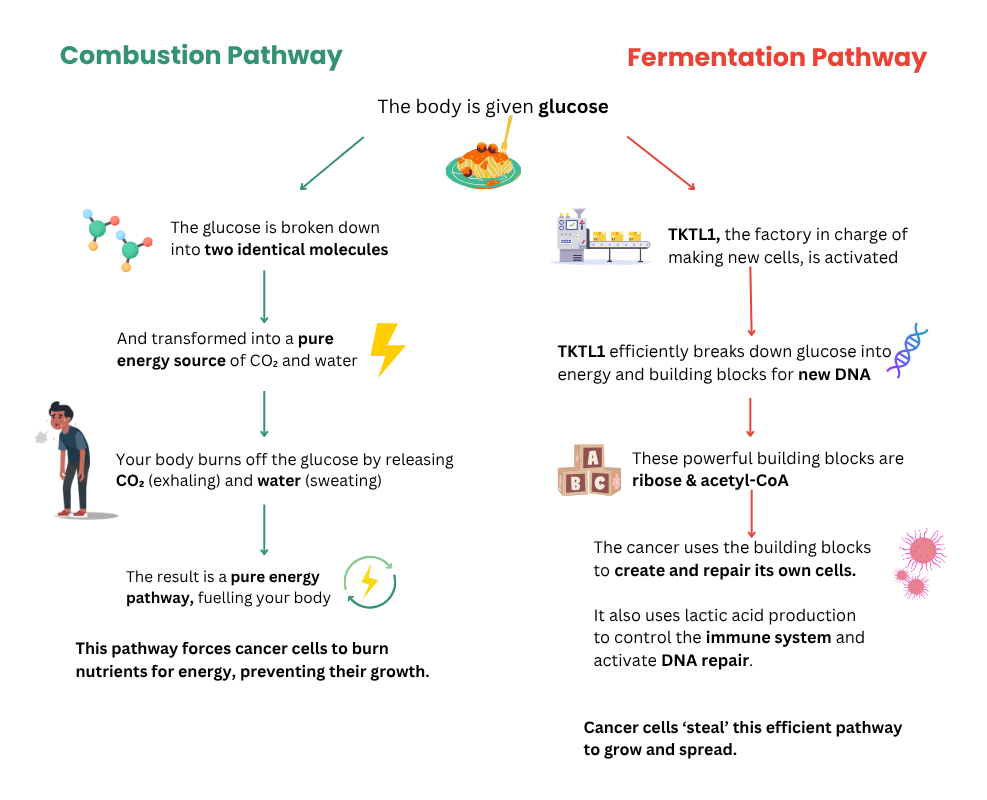
The two energy pathways: combustion and TKTL1 fermentation (pentose phosphate pathway, PPP)
Cells can get energy from glucose in more than one way. On the combustion (oxidative) pathway, sugar is burned with oxygen to release energy. On the fermentation pathway, sugar is broken down quickly into lactic acid and building blocks, a pathway many cancer cells favour, known as the Warburg effect.
Switching Energy Metabolism
Dr Coy’s strategy is to feed the body with sugars that do not activate TKTL1. Glucose switches the TKTL1 pathway on; galactose and mannose do not, so replacing glucose with them leaves the fermentation pathway with no fuel, and the cell moves to the combustion pathway. Tagatose mostly stays in the colon.
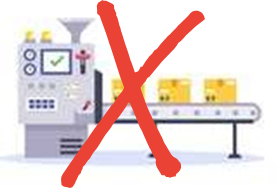
We have to turn off the TKTL1 factory by removing its fuel.

If we don’t give the body glucose, the TKTL1 factory cannot be activated.
The science underneath this is partly well established and partly still developing. That many cancer cells rely on fermenting glucose is a long-recognised effect, the Warburg effect. The role of TKTL1 in that metabolism is an active and substantial area of research: a 2010 review in Nature Reviews Cancer discussed its importance, and researchers are developing drugs that target this metabolism, including work toward therapies that spare healthy cells.
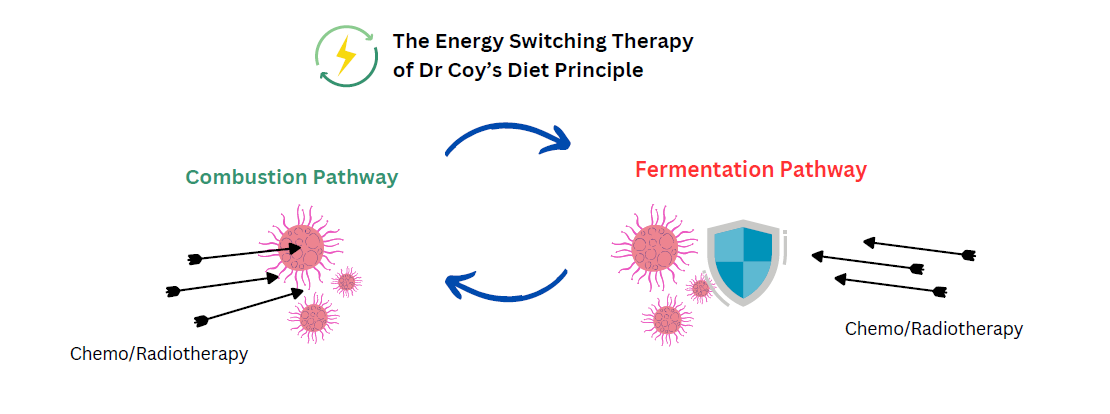
Dr Coy’s model of the metabolic switch, and how he believes cancer cells respond to chemotherapy and radiotherapy in each state. This is his hypothesis, which his research investigates.
What Dr Coy’s own research investigates is what this metabolic switch means for cancer cells, and how they respond to chemotherapy and radiotherapy. That is his hypothesis and the focus of his work, rather than a settled conclusion.

1. Carbohydrate Management with Dr Coy’s Sugars
1g of carbohydrates (which release glucose and fructose) per kg of body weight daily.
Galactose, mannose and tagatose are exempt from this rule.
Classic sugars and starches provide the preferred fuel for fermenting cancer cells, especially the oxygen-deficient regions in tumours. Reducing this type of carbohydrate limits the fuel available to fermenting cancer cells. Adding Dr Coy’s sugars, galactose and mannose, actively encourages the metabolic switch to the combustion pathway. Including tagatose provides the sweet, familiar taste of classic sugars, produces a slower glucose response, and is largely fermented in the colon rather than absorbed in the small intestine.
In Dr Coy’s model, this method of carbohydrate management limits the fermentation pathway that cancer cells use to repair, spread and evade the immune system. Healthy cells and brain cells can still get energy from burning fats, and partly from protein building blocks (ketogenic amino acids).
Follow Dr Coy’s Traffic Light Food List to help manage carbohydrate intake.
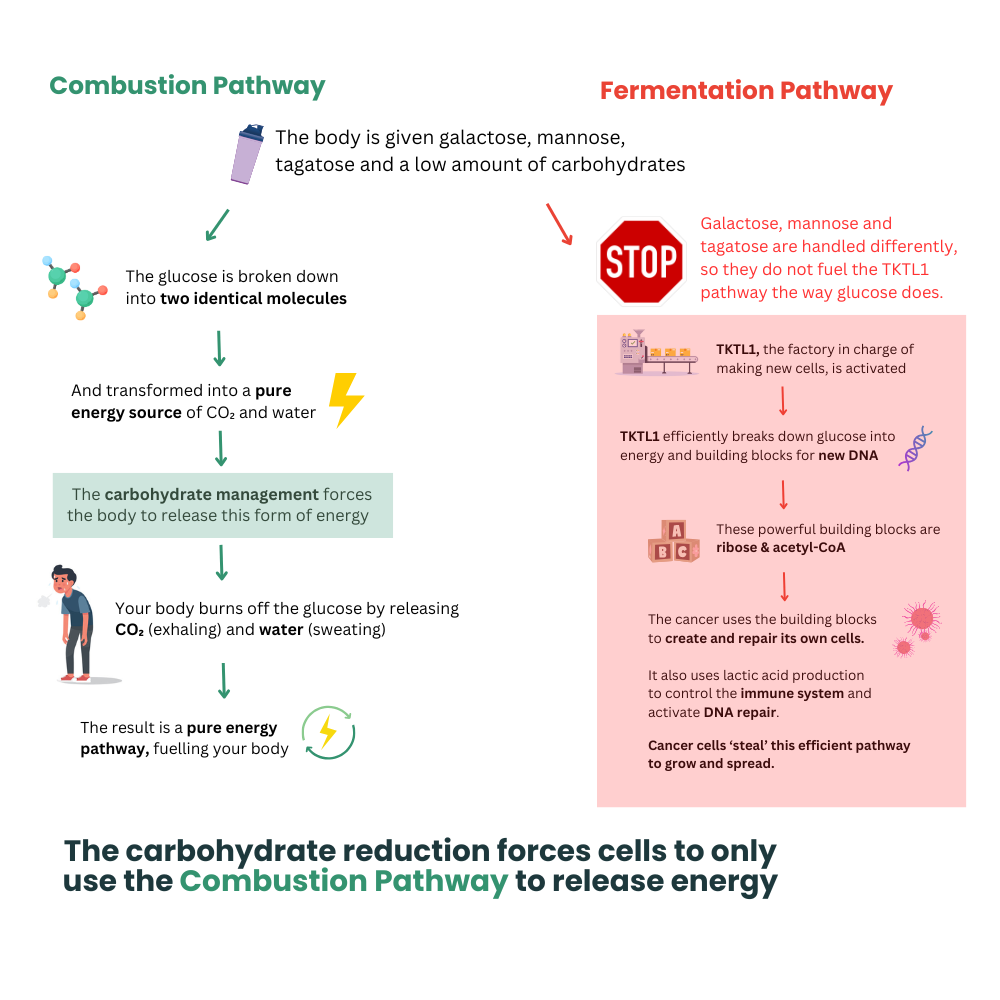
Dr Coy reduces ordinary carbohydrates, which release glucose, the main fuel for the fermentation pathway. Lowering them shifts the body toward using fat for energy, a ketogenic state. In place of ordinary sugar he uses low-glycaemic sugars, and he postulates that galactose and mannose are handled differently, so cells lean on the combustion pathway.
2. DHA & EPA & MCT oils
DHA and EPA are essential fatty acids found naturally in high-fat fish, and in high-quality oils such as linseed, hemp and walnut oil.
Fats with medium-chain fatty acids (MCT), primarily in coconut oil, are converted into ketone bodies.
Together they offer the body ideal energy sources for burning fat and support the combustion pathway in the mitochondria.
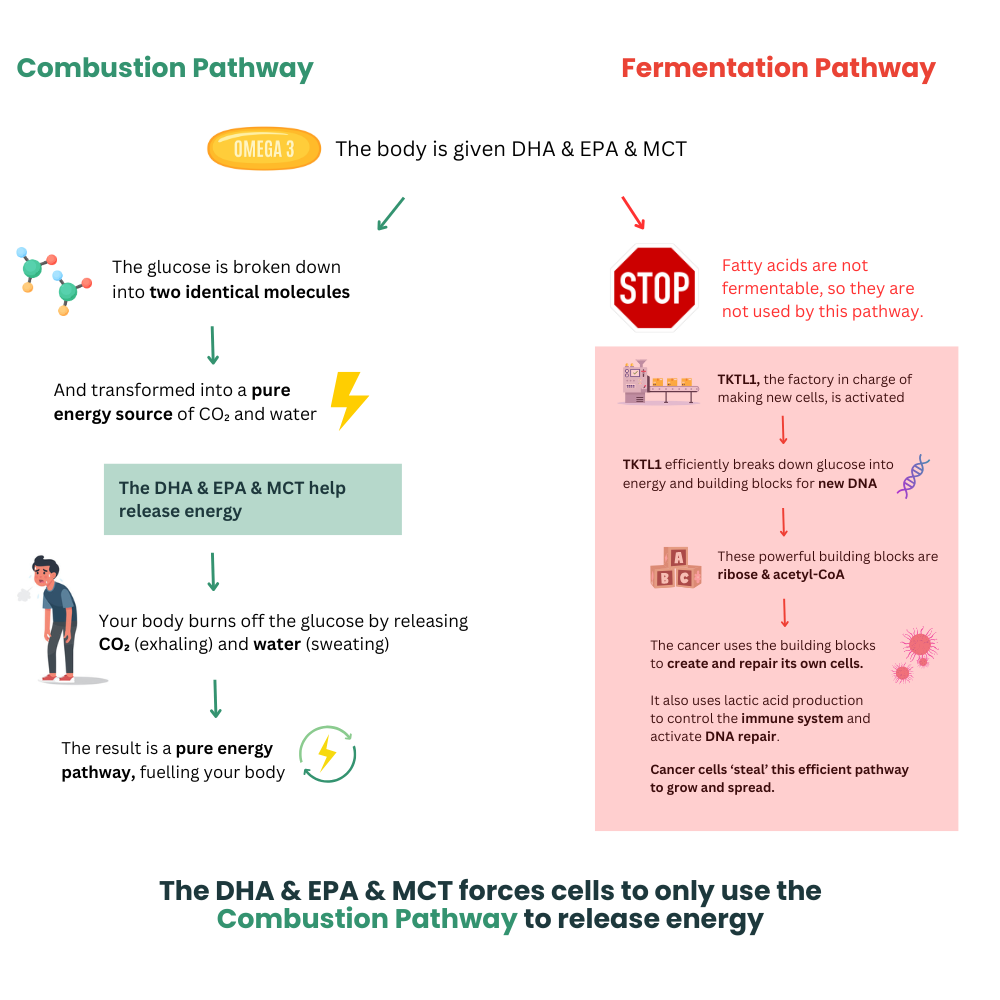
His concept includes omega-3 fats (DHA and EPA), found in oily fish and in high-quality oils such as linseed, hemp and walnut, and MCT fats, found mainly in coconut oil. Fatty acids are not fermentable, so they are used by the combustion pathway rather than the fermentation pathway, and MCTs also yield ketone bodies.
3. Secondary Plant Compounds
The most valuable polyphenols are found in berries, vegetables and teas; glucosinolates, for example, are found in broccoli.
Research has studied these compounds for how they support mitochondrial function and stabilise energy generation through combustion, the pathway cancer cells do not favour.
Polyphenols such as quercetin also help support this pathway.
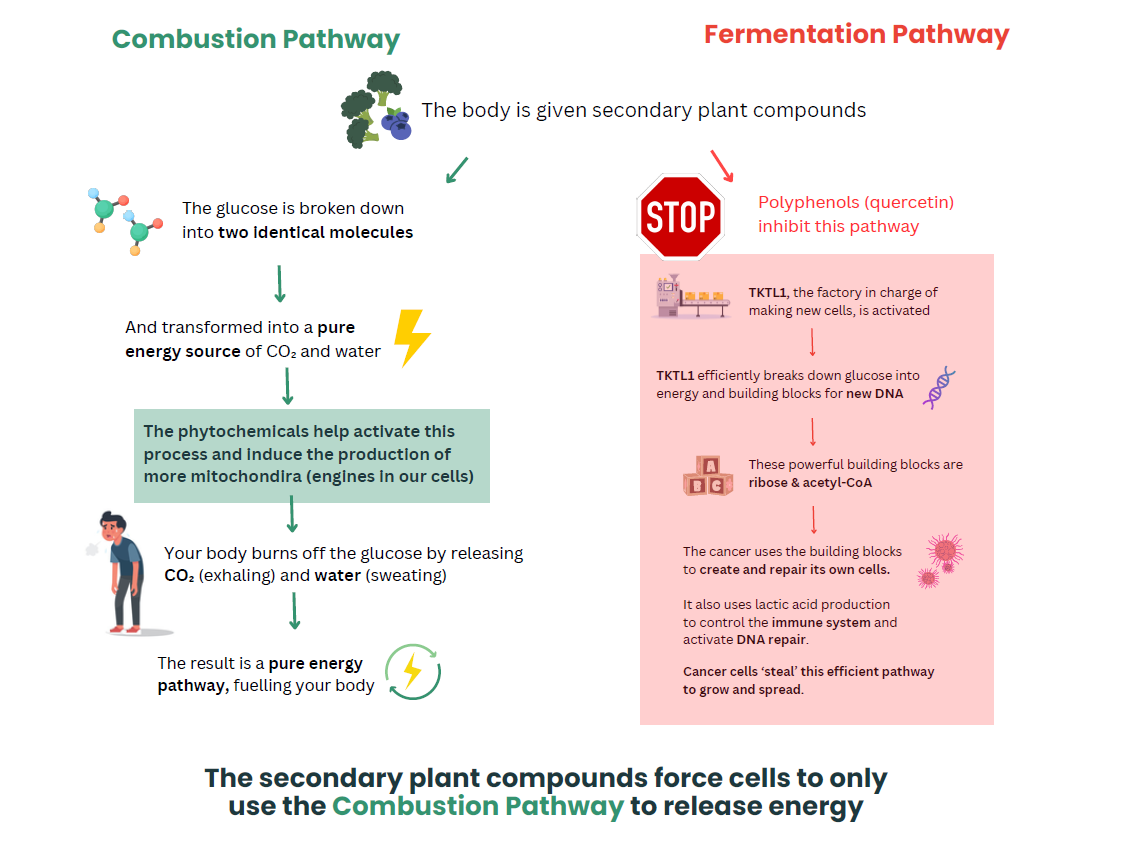
He includes secondary plant compounds, especially polyphenols such as quercetin, pointing to research that they support the mitochondria (the cell’s energy engines) and the combustion pathway.
4. Tocotrienols
Tocotrienols are special, unsaturated forms of vitamin E found naturally in plants and fruits, especially palm fruit.
Researchers found tocotrienols inhibit HIF1a (hypoxia-inducible factor), one of the key factors in fermentation metabolism.
HIF1a is known to play a role in how cancer cells resist chemotherapy and radiotherapy.
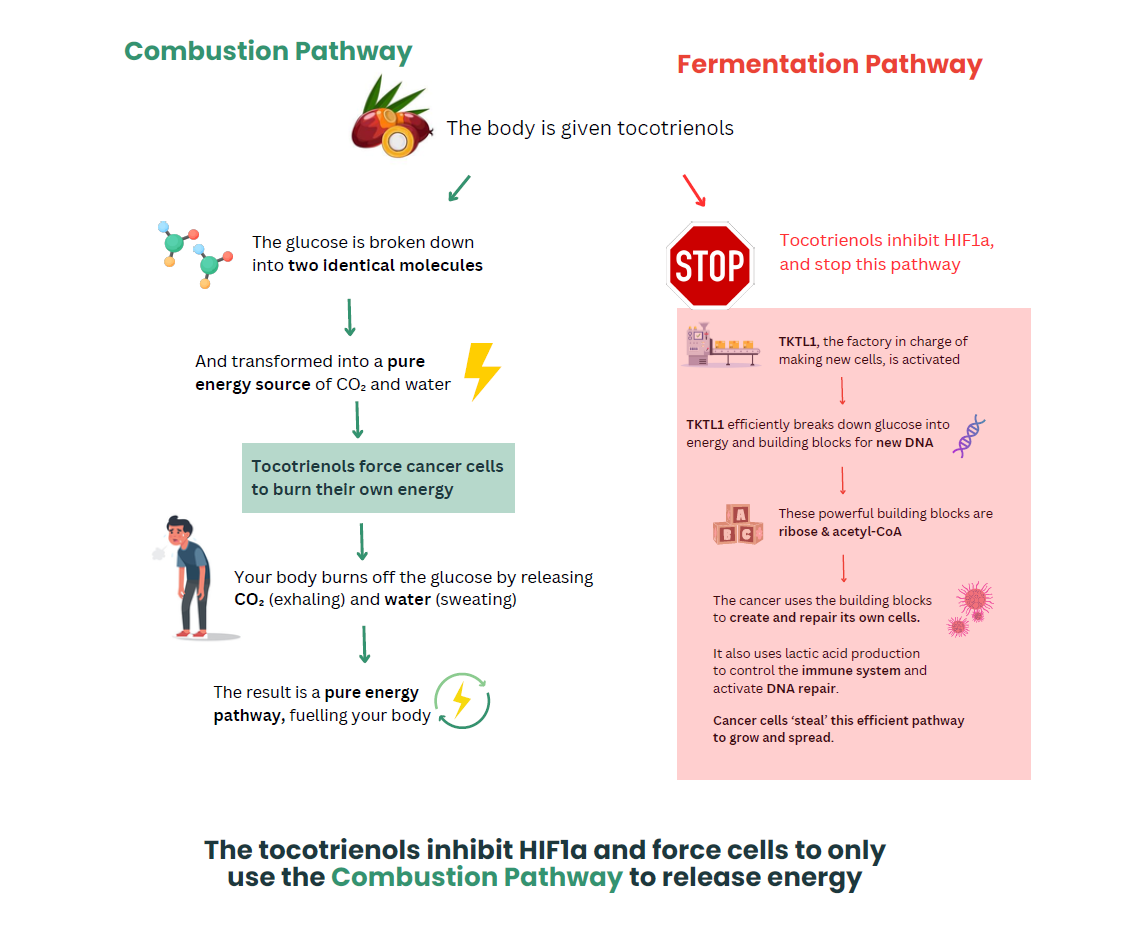
Dr Coy includes tocotrienols, the bioactive forms of vitamin E, citing research that they influence HIF-1-alpha, a factor in how cells behave in low-oxygen conditions relevant to some cancer-cell metabolism.
5. Lactate
Fermenting cancer cells create large amounts of lactic acid to protect themselves. They use it to break down the tissue around the tumour (matrix degeneration) and to spread, and lactic acid also suppresses the immune system.
When lactate is taken in the diet, it is broken down in the liver into bicarbonate, which acts as a buffer.
Dr Coy’s model postulates that this buffering affects the tumour environment, and this is what his research investigates.
Research suggests cancer cells also produce lactic acid to help repair their damaged DNA.
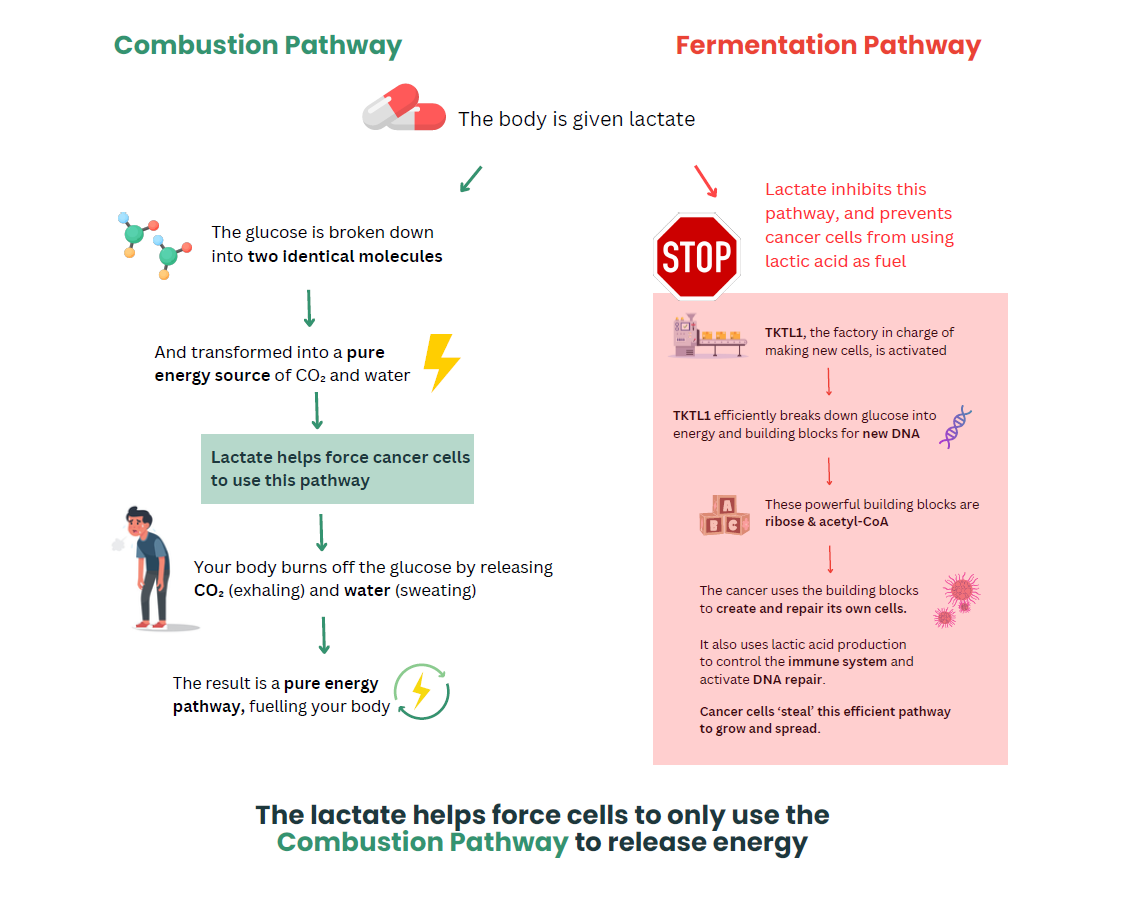
Dr Coy addresses the role of lactate in the environment around a tumour, with a rationale about how it is processed and its buffering effects, as part of favouring the combustion pathway.
The Research
A few of the studies behind this thinking: a human study found tumour lactate fell after a few days on a ketogenic diet; laboratory studies found mannose interferes with the pentose phosphate pathway and makes cancer cells more sensitive to chemotherapy; and a review concludes that targeting cancer metabolism is a promising complementary approach, while noting that more clinical research is needed. Explore the full set of studies in our research library.
Dr Coy’s book and the practical detail
Dr Coy sets out the specific quantities and the day-to-day practicalities in his book, The Cancer Fighting Diet. We describe the thinking here rather than reproduce a regimen, because decisions of that kind should be taken with a person’s own doctors.

Literature
1. Xu X et al 2OO9: IntJ Cancer 2OO9, 124:133O -1337
2. Tennant DA et al 2O1O. Nature Reviews Cancer 2O1O, 1O: 267 – 277
3. Shibata A et al 2OO8: J Nutr. 2OO8, 138 (11): 2136- 2142
4. Sun W et al 2O1O; Clin Cancer Res. 2O1O, 16(3): 857 – 866
5. Qutub AA et al 2OO8: Molecular and Cellular Biology 2OO8, 28 (15): 51O6 – 5119
6. Otto C et al 2OO8: BMC Cancer 2OO8, 8:122
7. Seyfried TI et al 2OO5; Nutrition & Metabolism 2OO5, 2:3O
8. Dihal AA et al 2OO8, Proteomics 2OO8, 8:45 – 61
9. Walenta S et al 2OOO; Cancer Res 2OOO, 6O: 916 – 921
10. Knichwitz G 2OO5: Intensivmedizin up2date 2OO5, 1: 2O5 – 22O
11. Chen Y, Wu J, Zhai L, Zhang T, Yin H, Gao H, Zhao F, Wang Z, Yang X, Jin M, Huang B, Ding X, Li R, Yang J, He Y, Wang Q, Wang W, Kloeber JA, Li Y, Hao B, Zhang Y, Wang J, Tan M, Li K, Wang P, Lou Z, Yuan J. Metabolic regulation of homologous recombination repair by MRE11 lactylation. Cell. 2O24 Jan 18;187(2):294-311.e21.
12. Khodabakhshi A, Akbari ME, Mirzaei HR, Mehrad-Majd H, Kalamian M, Davoodi SH. Feasibility, Safety, and Beneficial Effects of MCT-Based Ketogenic Diet for Breast Cancer Treatment: A Randomized Controlled Trial Study. Nutr Cancer. 2O2O;72(4):627-634.
13. Schroeder U, Himpe B, Pries R, Vonthein R, Nitsch S, Wollenberg B. Decline of lactate in tumor tissue after ketogenic diet: in vivo microdialysis study in patients with head and neck cancer. Nutr Cancer. 2O13
14. Knopf P, Stowbur D, Hoffmann SHL, Hermann N, Maurer A, Bucher V, Poxleitner M, Tako B, Sonanini D, Krishnamachary B, Sinharay S, Fehrenbacher B, Gonzalez-Menendez I, Reckmann F, Bomze D, Flatz L, Kramer D, Schaller M, Forchhammer S, Bhujwalla ZM, Quintanilla-Martinez L, Schulze-Osthoff K, Pagel MD, Fransen MF, Röcken M, Martins AF, Pichler BJ, Ghoreschi K, Kneilling M. Acidosis-mediated increase in IFN-γ-induced PD-L1 expression on cancer cells as an immune escape mechanism in solid tumors. Mol Cancer. 2O23 Dec 15