

What is Mannose?
Mannose is a simple sugar (monosaccharide) similar to glucose. It occurs naturally in various fruits such as cranberries, oranges, and apples, as well as in seeds and coffee beans. In the body, mannose plays a key role in the formation of glycoproteins — essential molecules involved in cell communication and immune function.
Mannose has also been studied for its potential to support metabolic health, modulate immune responses, and influence certain disease pathways. Research suggests it may help reduce inflammation, improve gut health, and, in some studies, slow tumour growth by affecting specific metabolic processes.
With about 60% of the sweetness of sucrose, mannose offers mild sweetness along with functional health properties.
Mannose at a glance
- Low glycaemic index
- Prevents high blood glucose levels
- Reduces inflammation
- Supports serotonin production and brain health
- Improves efficacy of cancer treatments/therapies
- Improves gut health
More and more independent accredited research highlights additional benefits of Mannose, including its ability to reduce inflammation.

What makes Mannose special

Improves efficacy of cancer treatments

Immunity Support with Anti-inflammatory Benefits

Promotes metabolic and gut health

Boosts mood and brain health

Enhances the effectiveness of cancer treatments
Studies show that mannose can make cancer treatments work more effectively and is considered safe for use alongside conventional therapies.
Mannose affects several key energy pathways that cancer cells rely on to grow and survive. By interfering with these pathways, it helps make cancer cells more sensitive to chemotherapy, which can lead to their destruction. In animal studies, small doses of mannose slowed tumour growth by accumulating inside cells as mannose-6-phosphate and disrupting how cancer cells use glucose for energy. Unlike fructose, which can speed up tumour growth, mannose appears to slow it down.
Research has also found that mannose can stop cancer cells, such as non-small cell lung cancer (NSCLC), from multiplying by halting them early in their growth cycle. It also enhances the effect of chemotherapy drugs like cisplatin and 5-fluorouracil (5-FU), helping these drugs kill cancer cells more efficiently and even work against drug-resistant cells.
The Science Behind The Increased Efficacy
In studies on breast cancer, particularly the aggressive triple-negative type (TNBC), mannose has shown promise by helping the immune system recognise and attack cancer cells. It does this by breaking down a protein called PD-L1, which normally allows cancer cells to hide from immune defences. When used with certain immunotherapies, mannose further weakens cancer cells and improves treatment response in experimental models.
Overall, early findings suggest mannose may enhance cancer therapies and reduce tumour growth without significant side effects.
New research from Harada et al. shows that high mannose uptake “clogs” cancer metabolism by causing a drop in dNTPs — the molecules required for DNA replication. This shortage triggers replication stress, making cancer cells more vulnerable to treatments like cisplatin without harming healthy tissue.
A 2023 colorectal cancer study found that mannose inhibits the pentose phosphate pathway, reducing the cell’s ability to manage oxidative stress and produce DNA building blocks. When combined with 5-FU, this metabolic disruption led to stronger tumour suppression in both cell and animal models.
In glioma research, mannose was shown to activate myeloperoxidase (MPO) in immune cells within the tumour microenvironment. This immune-boosting effect helped slow tumour progression, suggesting mannose may influence both cancer metabolism and immune-mediated killing.
In triple-negative breast cancer models, mannose activated AMPK, accelerating the breakdown of PD-L1 and making cancer cells more visible to the immune system. When paired with anti-PD-1 immunotherapy or radiotherapy, treatment responses improved significantly, highlighting mannose’s potential as an immunotherapy sensitiser.
How does the calorie content of mannose compare to sucrose?
Using the classic ‘a calorie is just a calorie model’ (developed in 1848) it’s hard to see the benefits of Mannose, but when we revise the model to reflect reality, we can see why it energises us very differently.
Even though Mannose consists of the same two sugar sub-units as sucrose (glucose and fructose) it impacts the body differently.
Sucrose has an α-1.2-glycosidic bond which is rapidly broken down, while Mannose takes longer to break down, because it has an α-1.6-glycosidic bond and a lower glycaemic index.
| Classic Calories | Fermenting Calories | Oxidising Calories | |
|---|---|---|---|
| Mannose | 4 kcal / g | 4 kcal / g | 4 kcal / g |
| Sucrose | 4 kcal / g | 4 kcal / g | 4 kcal / g |

Oxidising (using oxygen to release pure energy)

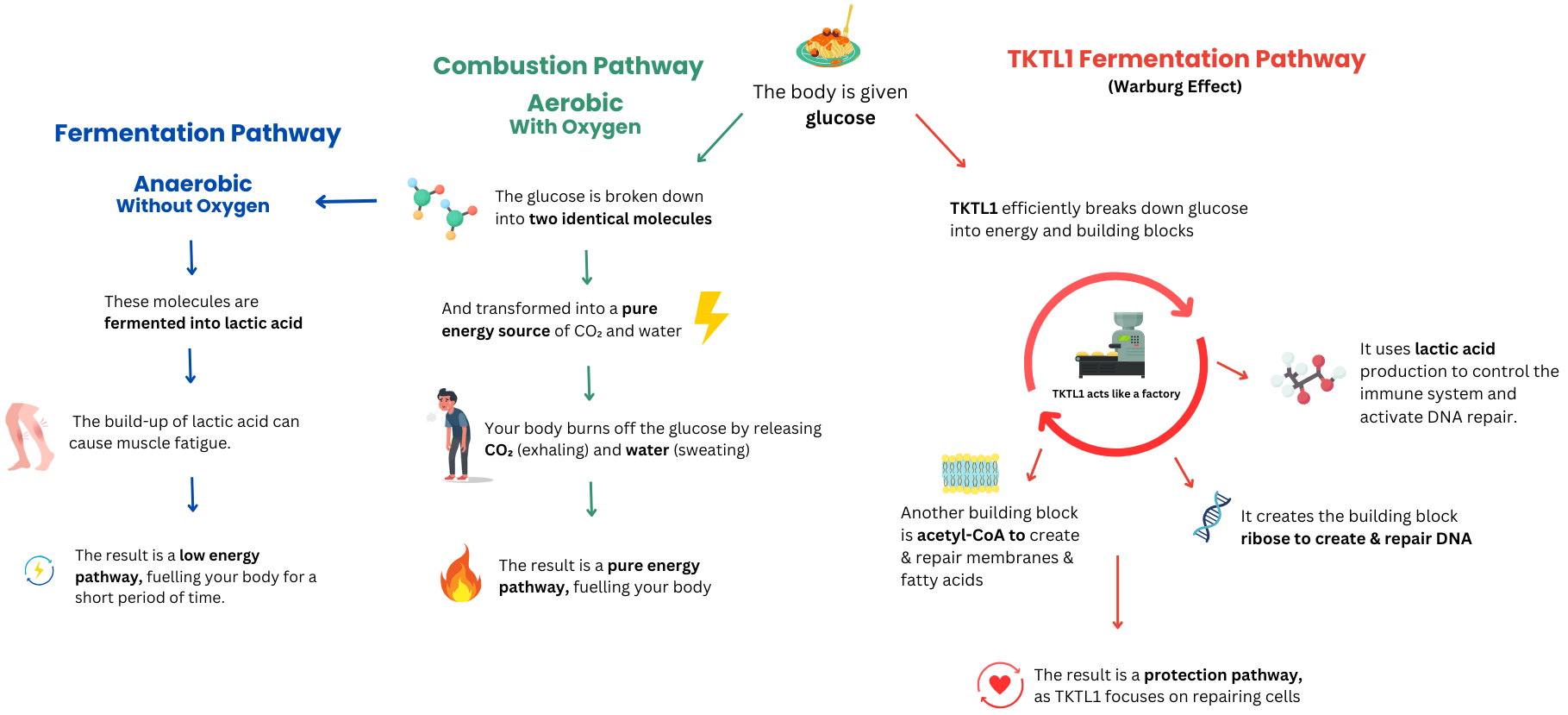
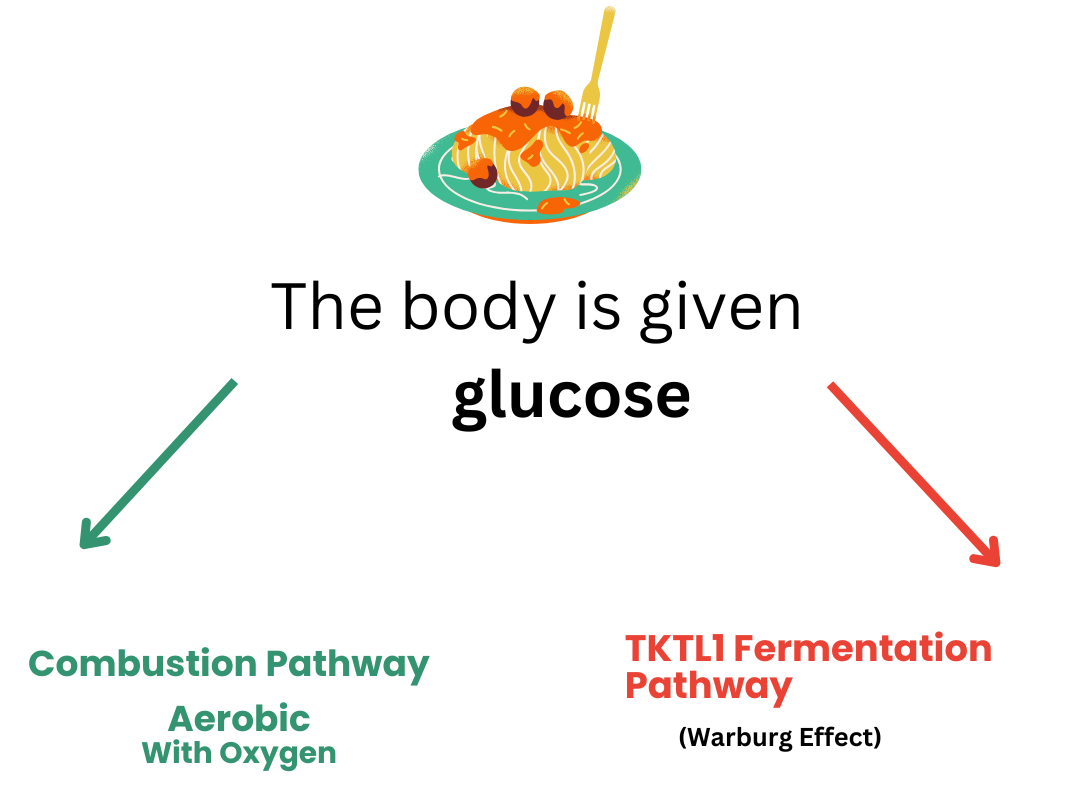
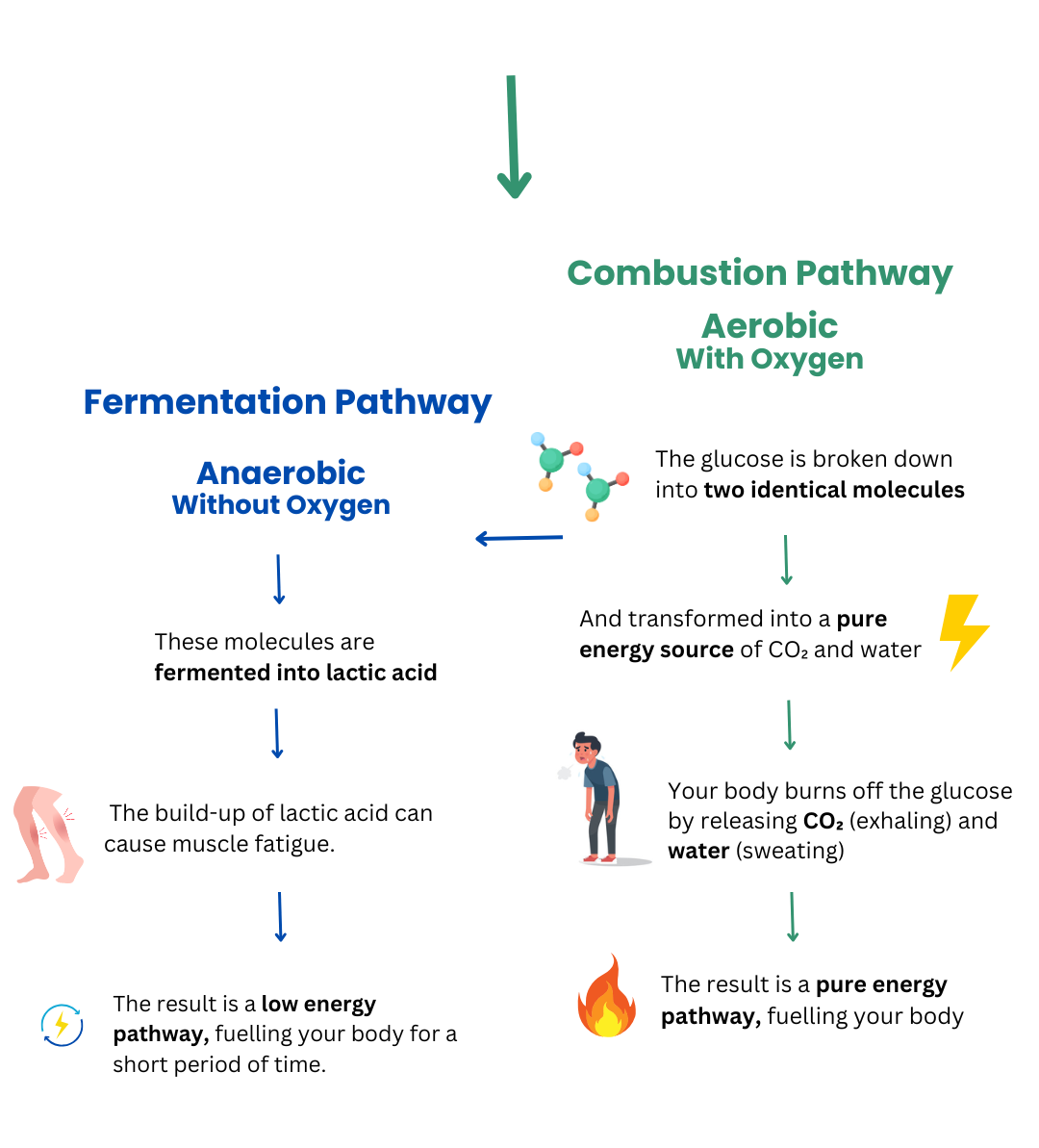
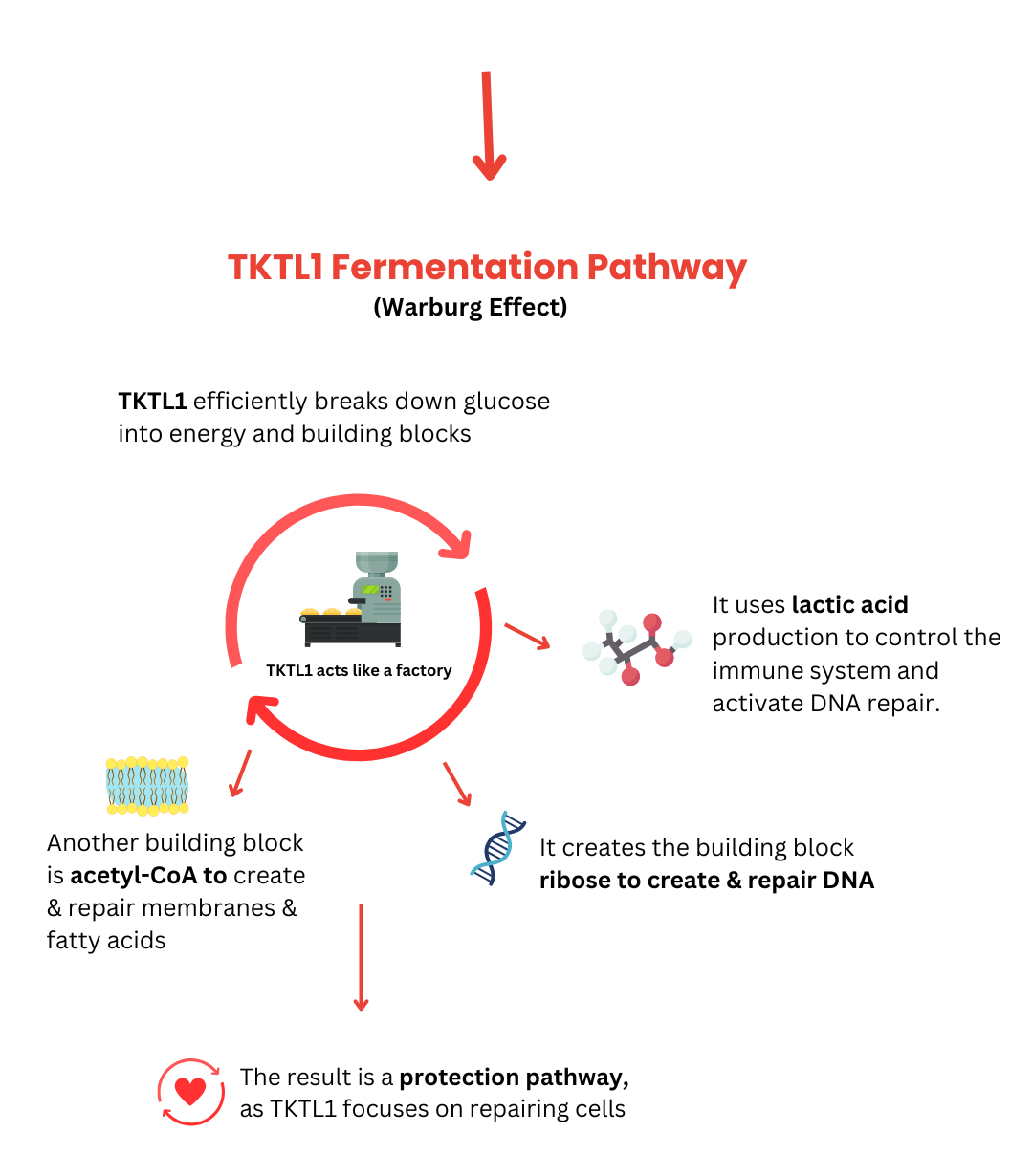
Making Energy from Metabolism
- Mannose is metabolised differently from glucose and is slowly absorbed in the body.
- It helps regulate metabolism by influencing gut microbiota composition.
- Mannose increases the ratio of Bacteroidetes to Firmicutes — a balance linked to better metabolism and lower body fat.
- This gut shift reduces calorie absorption and promotes the production of beneficial short-chain fatty acids.
- It supports lysosomal function and strengthens the gut barrier by increasing tight junction proteins.
- Mannose protects intestinal cells from damage and reduces inflammation throughout the body.
- By modulating metabolic pathways like glycolysis and the TCA cycle, it improves how the body utilises energy.
- Mannose provides mild sweetness without raising blood glucose or insulin levels — supporting stable, efficient energy metabolism.
Benefits
- Supports metabolic health by improving gut microbiota balance and reducing calorie absorption.
- Prevents weight gain and reduces body fat by altering gut bacteria linked to leaner body composition.
- Protects intestinal barrier integrity and strengthens gut lining through increased tight junction proteins.
- Reduces inflammation in the gut, liver, and throughout the body by regulating immune responses.
- Enhances cellular energy regulation and protects cells from oxidative and inflammatory damage.
- Improves liver function by reducing fat accumulation and promoting healthy metabolism.
- Supports brain health and mood by activating pathways involved in serotonin and BDNF production.
- Enhances cancer therapy effectiveness by disrupting cancer cell energy pathways without harming healthy cells.
- Provides gentle sweetness without raising blood glucose or insulin levels.
Mannose’s unique metabolic effect makes it ideal for:

Cancer

Ageing

Weight Management

Sports

Stress
What scientific evidence supports the use of mannose?
Explore the latest scientific studies and peer-reviewed research on Mannose. Learn more about Dr Johannes Coy’s extensive research in the field of nutrition and metabolic health.
Manipulating mannose metabolism as a potential anticancer strategy — Harada et al. (2025)
This new review shows that mannose — the C-2 epimer of glucose — can dampen the “Warburg effect” in cancer cells, slowing their proliferation and making them more susceptible to chemotherapy. PubMed+1
Mannose metabolism reshapes T-cell differentiation to enhance anti-tumor immunity — Qiu et al. (2024) showed that supplementing T cells with D-mannose reprograms their metabolism, preserving “stem-like” properties, reducing exhaustion, and boosting their anti-tumor effectiveness in vitro and in vivo.
Mannose inhibits the pentose phosphate pathway in colorectal cancer and enhances sensitivity to 5-fluorouracil therapy — Al Hadeethi et al. (2023)
Demonstrates mannose suppressing a key metabolic pathway (PPP), reducing tumour cell proliferation and boosting the effect of 5-FU chemotherapy in colorectal cancer models.
D-mannose promotes recovery from experimental colitis by inducing AMPK phosphorylation to stimulate epithelial repair — Zhang et al. (2022)
Reports mannose facilitating gut healing and epithelial recovery via AMPK activation — suggesting potential benefits for gut barrier health and inflammatory conditions.
Mannose impairs tumour growth and enhances chemotherapy — Gonzalez et al. (2018)
A foundational study showing mannose disrupts cancer-cell glucose metabolism, slows tumour growth and boosts chemotherapy effectiveness.
Mannose alters the gut microbiome, prevents diet-induced obesity, and improves host metabolism — Sharma et al. (2018)
Shows mannose acts like a prebiotic sugar: reshaping the gut microbiota, reducing fat accumulation, and improving glucose and metabolic health in mice.
Frequently asked questions
Is mannose safe?
Yes. Mannose is naturally derived from fruits like cranberries, oranges, and apples, as well as in seeds and coffee beans.
Is mannose good for diabetics?
Yes. Mannose does not increase blood sugar levels or insulin levels. Diabetics can use mannose without worrying about their blood sugar levels spiking.
Can mannose be used for cooking and baking?
Mannose is not recommended as a direct substitute for classic sugar because it will reduce the overall sweetness and introduce a different flavour profile. However, it can be mixed with other low-glycaemic sugars as a replacement for regular sugar in recipes, as it’s a reducing sugar (a sugar that causes browning when heated).
Does mannose raise blood sugar levels?
No. Mannose has a low glycaemic index, meaning it will not spike blood sugar levels.
Does mannose raise insulin levels?
Mannose is metabolised more slowly in the body, which means it does not cause a significant increase in insulin levels.
Is mannose keto friendly?
Yes, Mannose is suitable for a ketogenic diet as it does not cause blood sugar spikes and encourages fat mobilization and utilization, which are primary goals of the ketogenic diet.
Is mannose fructose free?
Yes, Mannose does not contain fructose, It is suitable for people who are sensitive or intolerant to fructose.
Is mannose lactose free?
Yes, Mannose contains no lactose.
Is mannose gluten free?
Yes, Mannose does not contain gluten (but could contain traces depending on manufacturing processes).
Is mannose safe for cancer patients?
Yes. Unlike fructose, which accelerates tumour growth, mannose can slow it down and shows promise as a safe treatment for cancer patients. It enhances the effectiveness of chemotherapy and radiation by disrupting key cancer growth pathways (like glycolysis, the TCA cycle, and the PI3K/AKT pathway), making cancer cells more vulnerable to treatment. Mannose has been shown to slow tumour growth in animal models, particularly in non-small cell lung cancer and triple-negative breast cancer, and it boosts the effects of drugs like cisplatin and 5-fluorouracil (5-FU) without harmful side effects.
What does mannose taste like?
It has a mild sweetness, which is less sweet than traditional sugar.
Is mannose healthy?
Yes. Mannose offers a variety of health benefits. Unlike classic sugar, mannose allows us to satisfy our sugar-cravings without any negative health effects. And it can counteract the negative effects of a high-fat diet by improving metabolism and gut health, as seen in animal models
What is mannose made from?
Mannose is found naturally in fruits like cranberries, oranges, and apples, as well as in seeds and coffee beans.
Where can I buy mannose?
The best way to incorporate Mannose into your diet is by using Dr Coy’s sugar mixtures. These mixtures have been scientifically developed to help lead a healthier lifestyle. Discover the full range of Dr Coy’s sugar mixtures from our partners.
References
Al Hadeethi, S., El-Baba, C., Araji, K., Hayar, B., Cheikh, I., El-Khoury, R., . . . Darwiche, N. (2023). Mannose inhibits the pentose phosphate pathway in colorectal cancer and enhances sensitivity to 5-fluorouracil therapy.
Chen, N., Zhao, M., Guo, Y., Wu, N., Cao, B., Zhan, B., . . . Zhang, L. (2023). D-mannose is a rapid inducer of ACSS2 to trigger rapid and long-lasting antidepressant responses through augmenting BDNF and TPH2 levels.
Dong, L., Xie , J., & Wang , Y. (2022). Mannose ameliorates experimental colitis by protecting intestinal barrier integrity .
Gonzalez, P., O’Prey, J., Cardaci, S., & al., e. (2018). Mannose impairs tumour growth and enhances chemotherapy.
Lieu, E., Kelekar, N., Bhalla, P., & Kim, J. (2021). Fructose and Mannose in Inborn Errors of Metabolism and Cancer .
Sharma , V., Smolin , J., Nayak , J., Ayala , J. E., Scott, D. A., Peterson , S. N., & Freeze, H. H. (2018). Mannose alters gut microbiome, prevents diet-induced obesity, and improves host metabolism.
Wang, Y., Xie, S., & He, B. (2020). Mannose shows anitumour properties against lung cancer via inhibiting proliferation, promoting cisplatin-medicated apoptosis and reducing metastasis.
Zhang, H., Zhao, X., Shei , Y., Wei , L., Liu , C., & Ma, X. (2022). D-Mannose promotes recovery from experimental colitis by inducing AMPK phosphorylation to stimulate epithelial repair .
Zhang, R., Yang , Y., Dong , W., Lin , M., He, J., Zhang , X., . . . Lv, L. (2022). D-mannose facilitates immunotherapy and radiotherapy of triple-negative breast cancer via degradation of PD-L1.
Harada Y, et al. Metabolic clogging of mannose triggers dNTP loss and genomic instability in human cancer cells. eLife.
D-Mannose enhances chemosensitivity in colorectal cancer by suppressing the pentose phosphate pathway. PubMed.
D-Mannose suppresses glioma progression via myeloperoxidase-mediated mechanisms. MDPI (Cancers).
D-Mannose promotes PD-L1 degradation via AMPK activation and enhances immunotherapy response in TNBC. PubMed.